Shared Vents in Virginia Beach and surrounding areas

When installing or upgrading your home’s water heater or furnace, some important questions often arise. The answer depends on several factors, including the type of venting system, the draft mechanism of each appliance, and compliance with Virginia’s Mechanical Code, Fuel Gas Code, NFPA 54, and NFPA 211.
Yes, but only under specific conditions. Both appliances must be natural draft and vent into a properly sized chimney or venting system. If either appliance uses induced draft or forced draft, they cannot share a vent.
This is not allowed under building codes. A forced draft system creates positive pressure, which can force dangerous combustion gases, including carbon monoxide, back into the home.
No. High-efficiency furnaces use Category III or IV venting, which operates under positive pressure and requires sealed venting. A natural draft water heater cannot vent into this system.
Types of Water Heater and Furnace Venting
Water heaters and furnaces require proper venting to expel combustion gases safely. There are three main venting types:
- Natural Draft: Uses the buoyancy of hot gases to rise through a vertical vent or chimney.
- Induced Draft: Uses a fan or blower to move exhaust gases through the venting system.
- Forced Draft: Pushes combustion gases under positive pressure and must be gas-tight to prevent leakage.
The compatibility of sharing a vent depends on whether the water heater and furnace use the same type of venting system.
What Does the Code Say?
See for yourself:
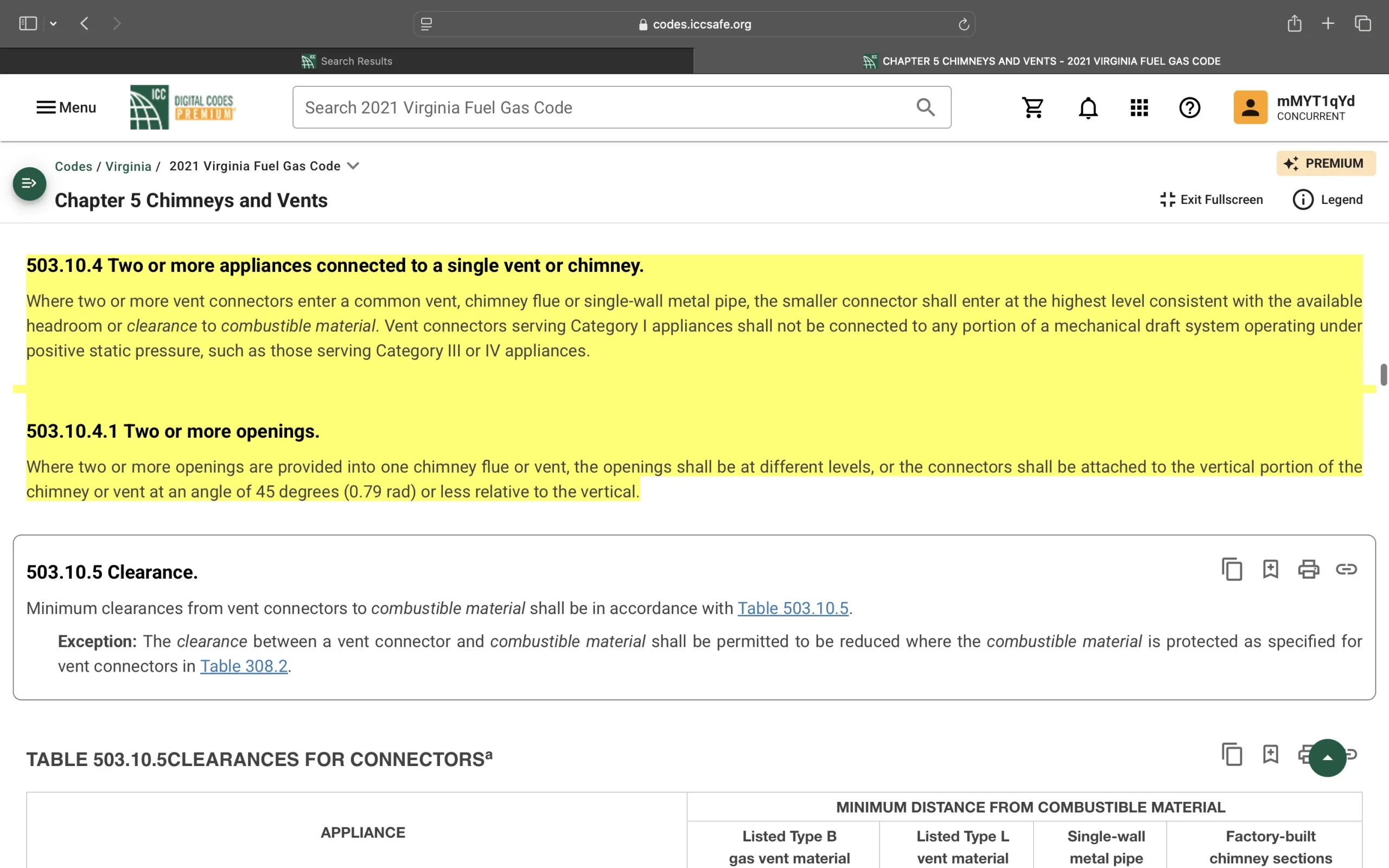
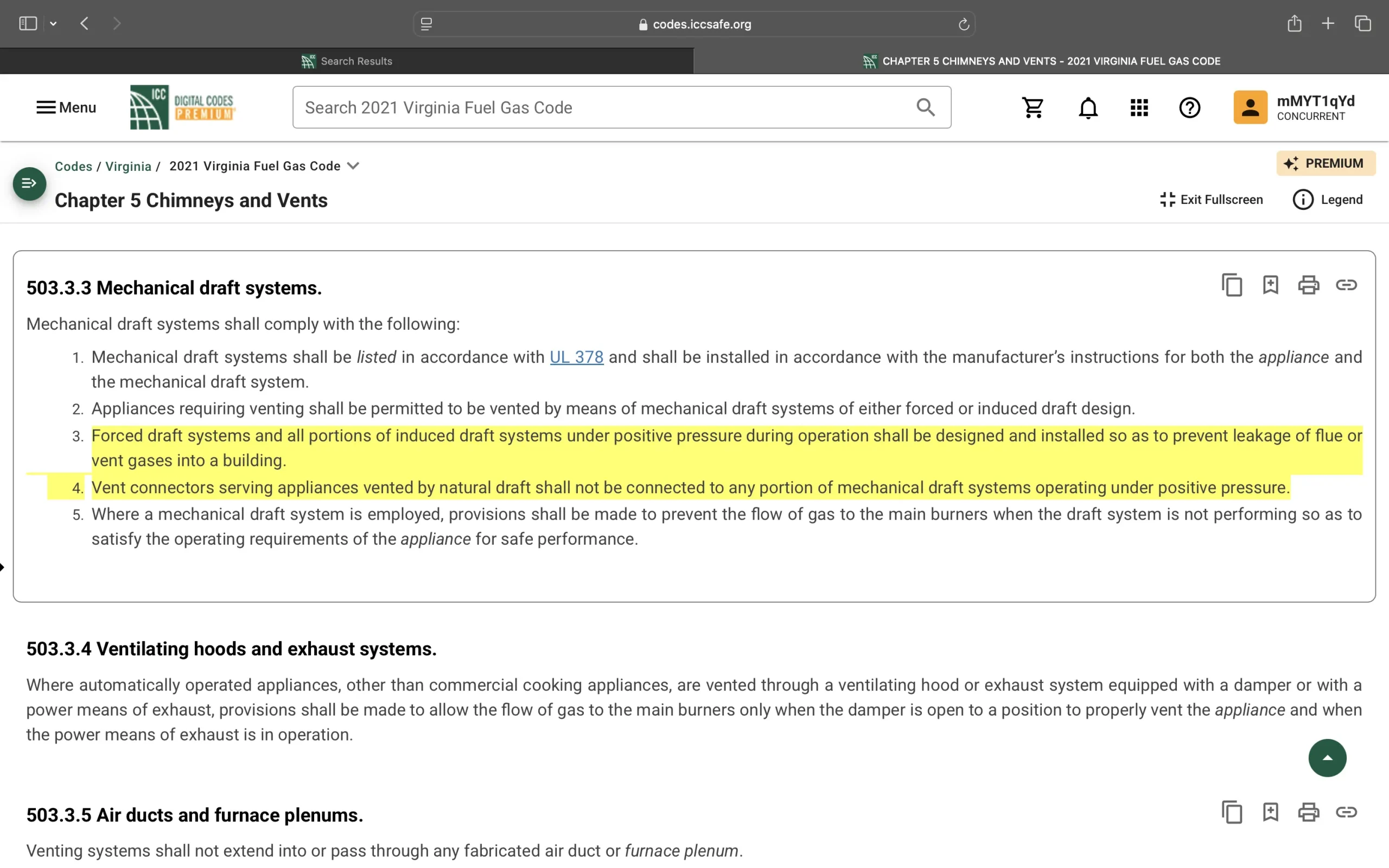
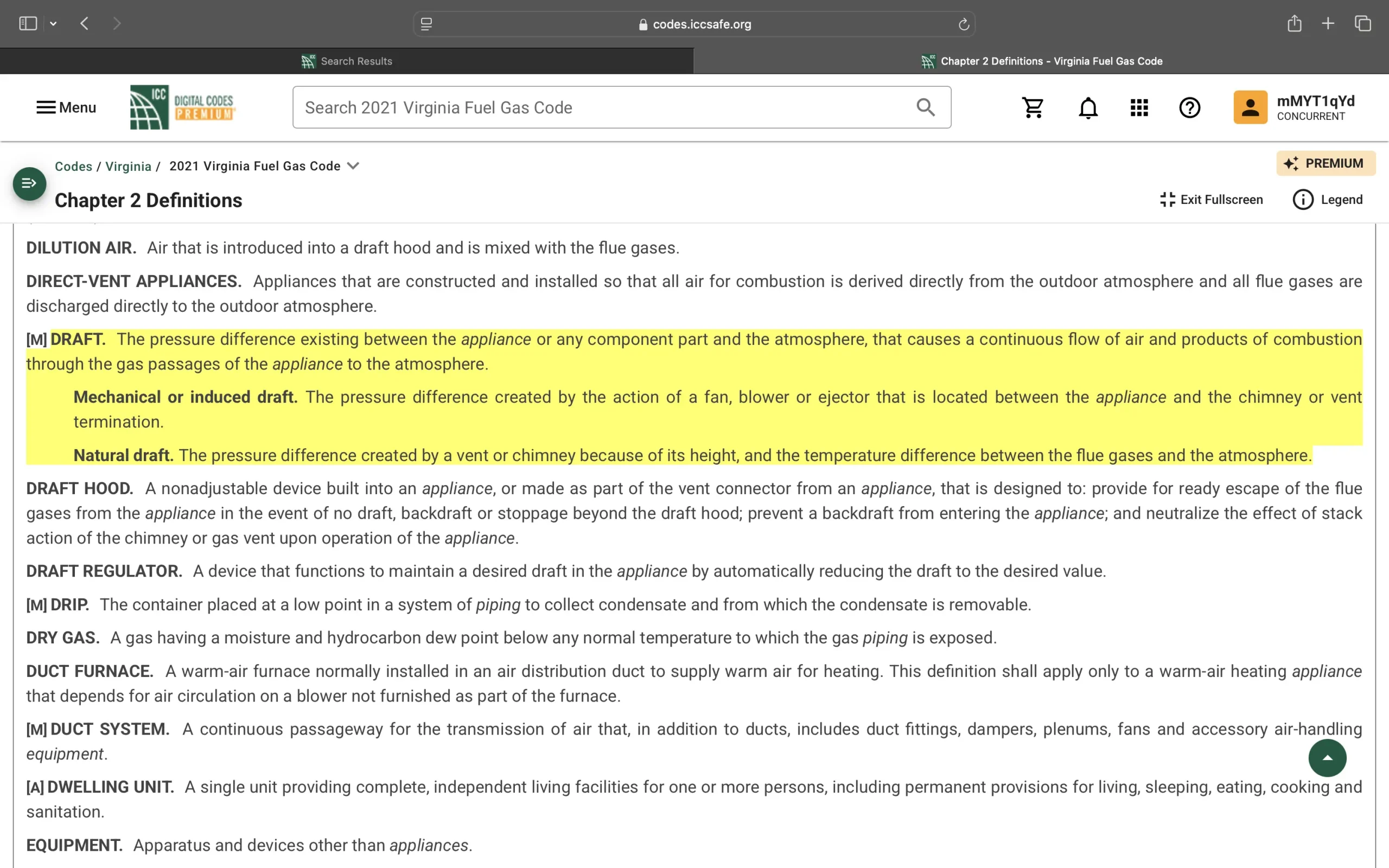
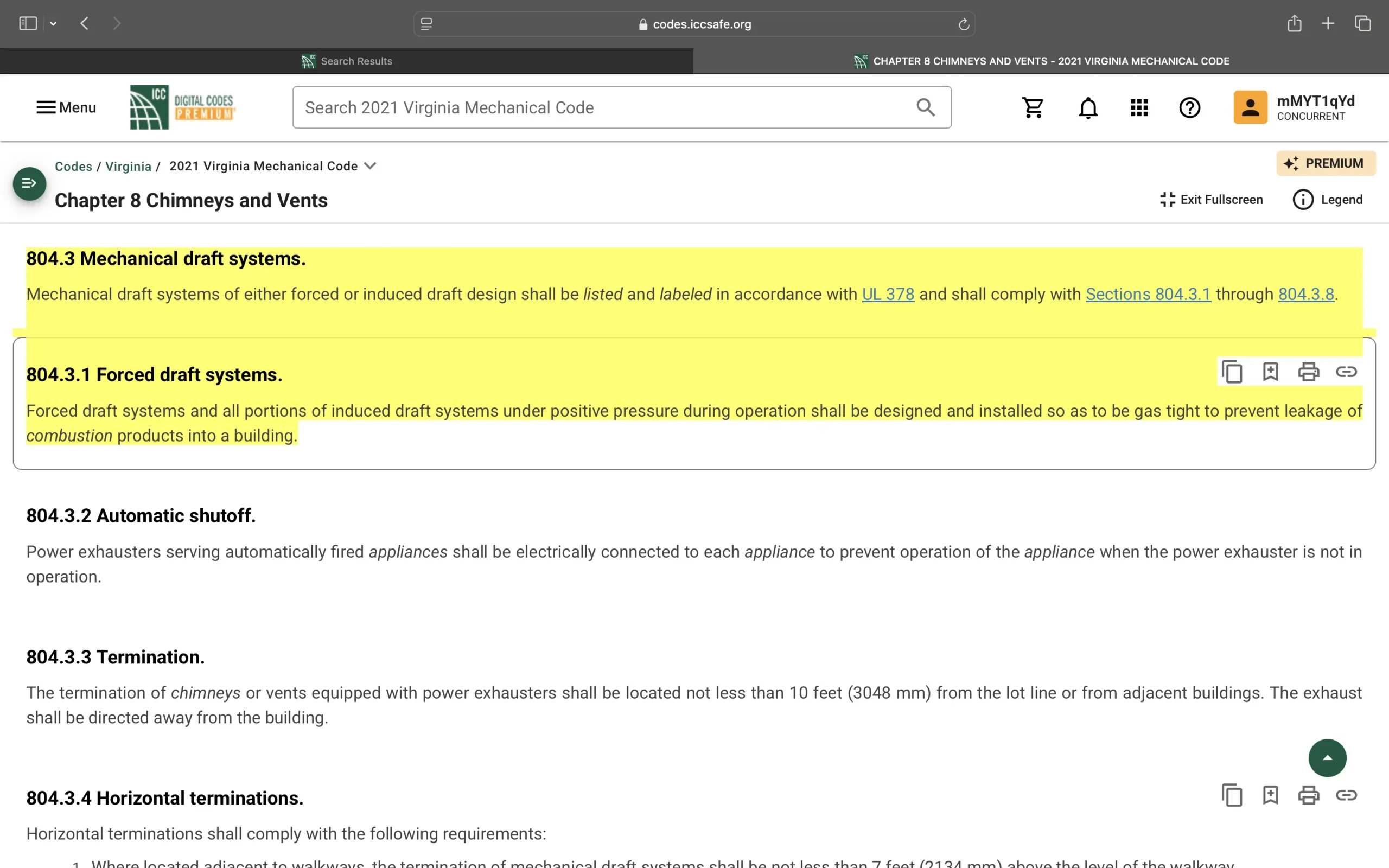
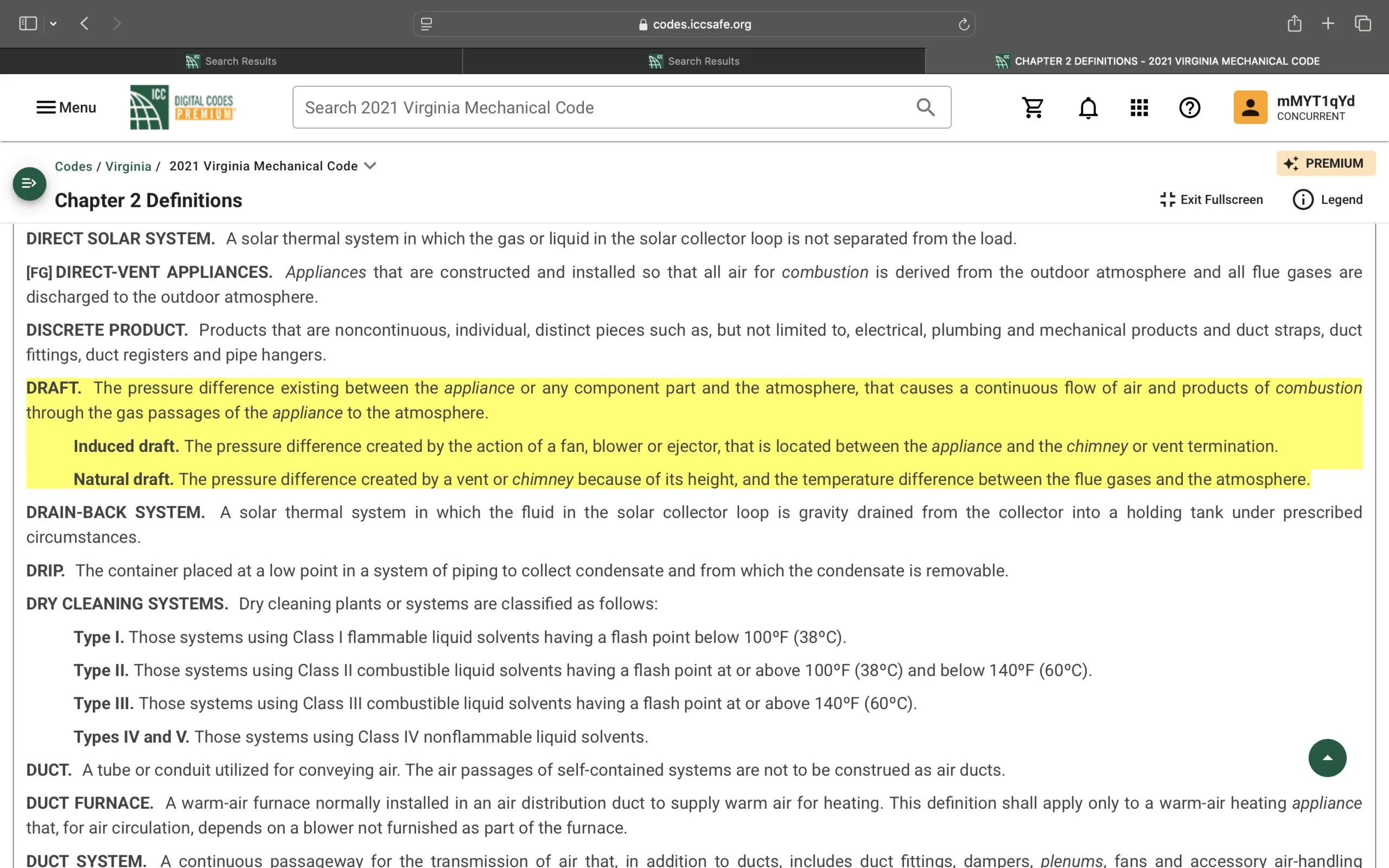
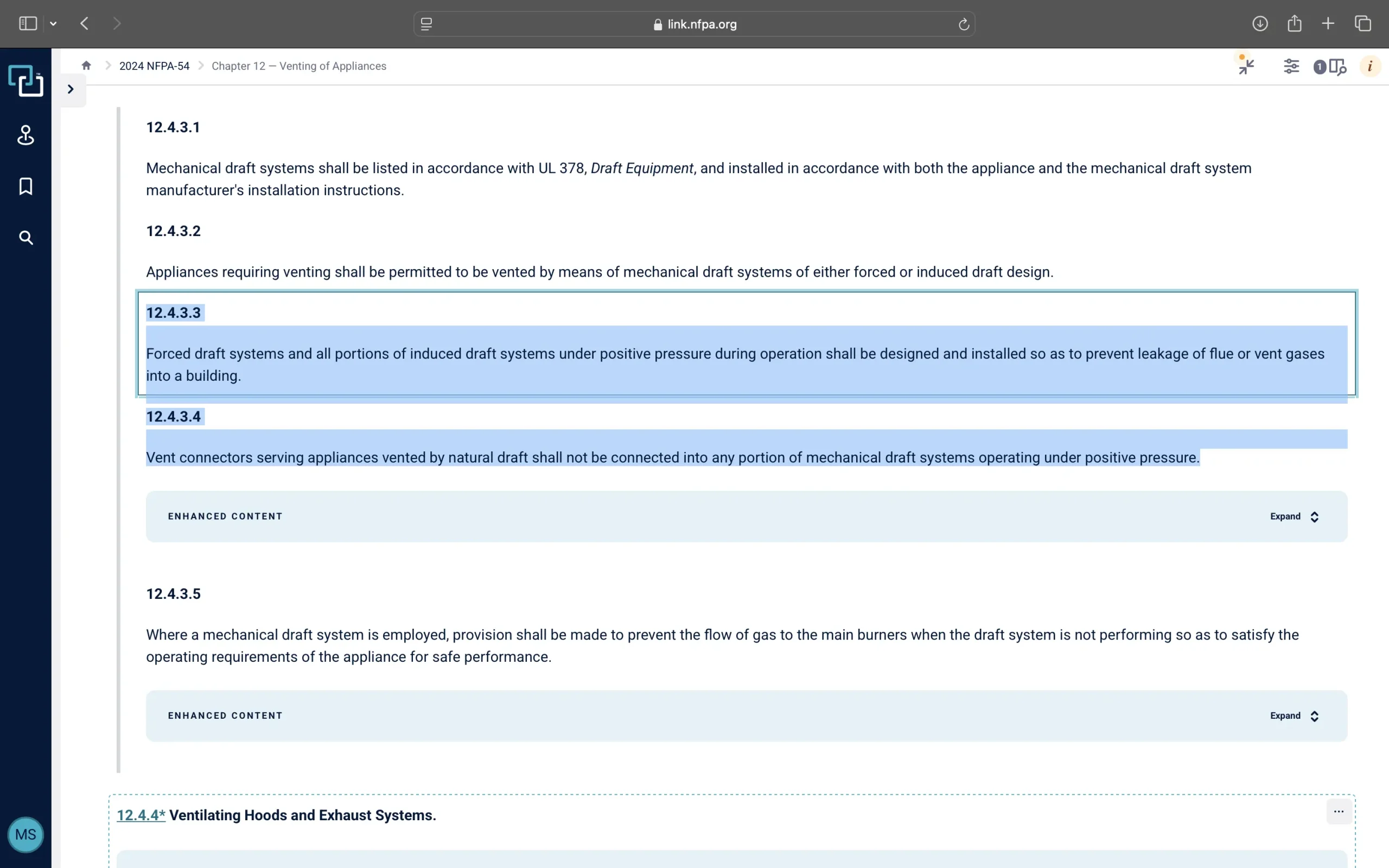
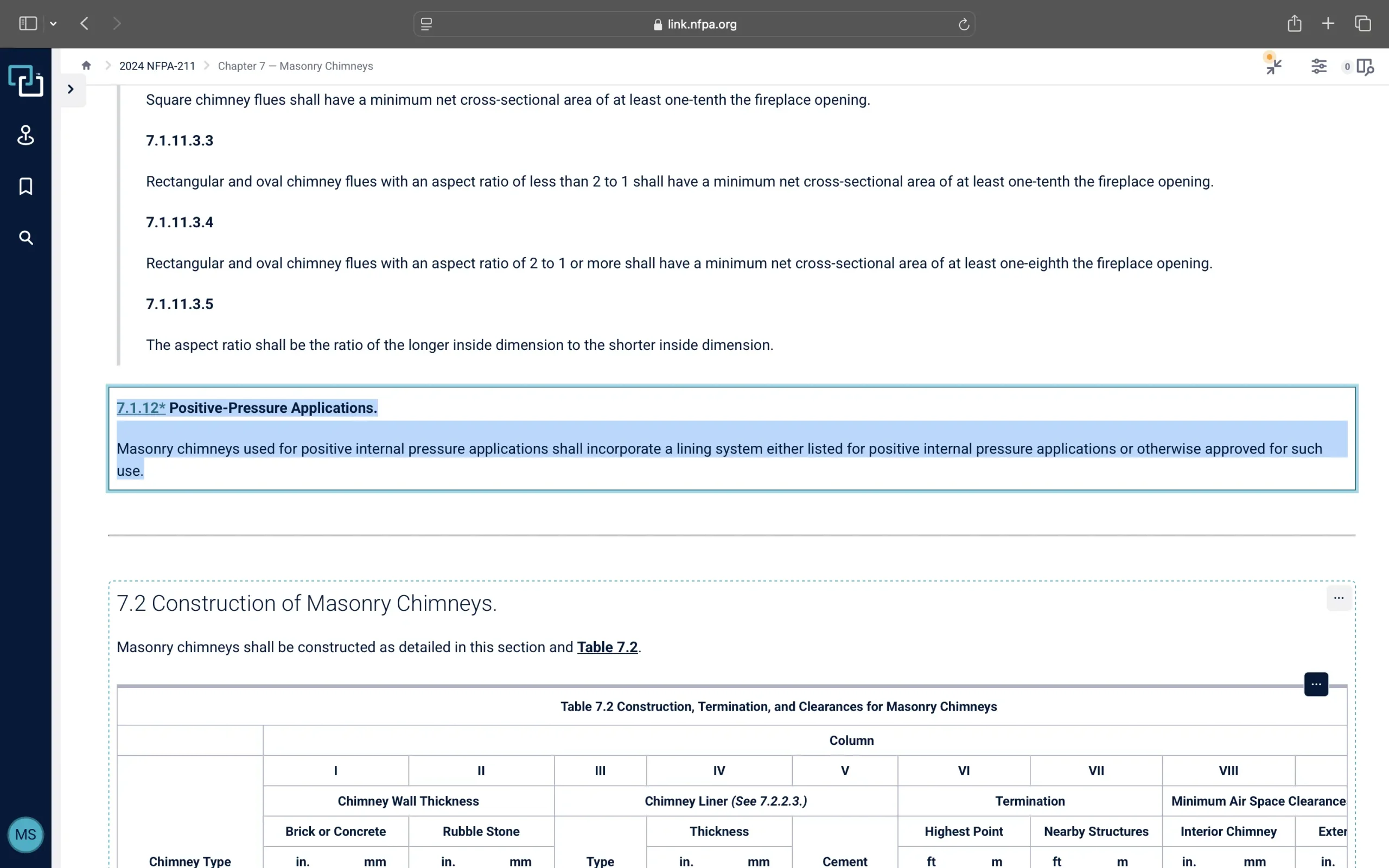
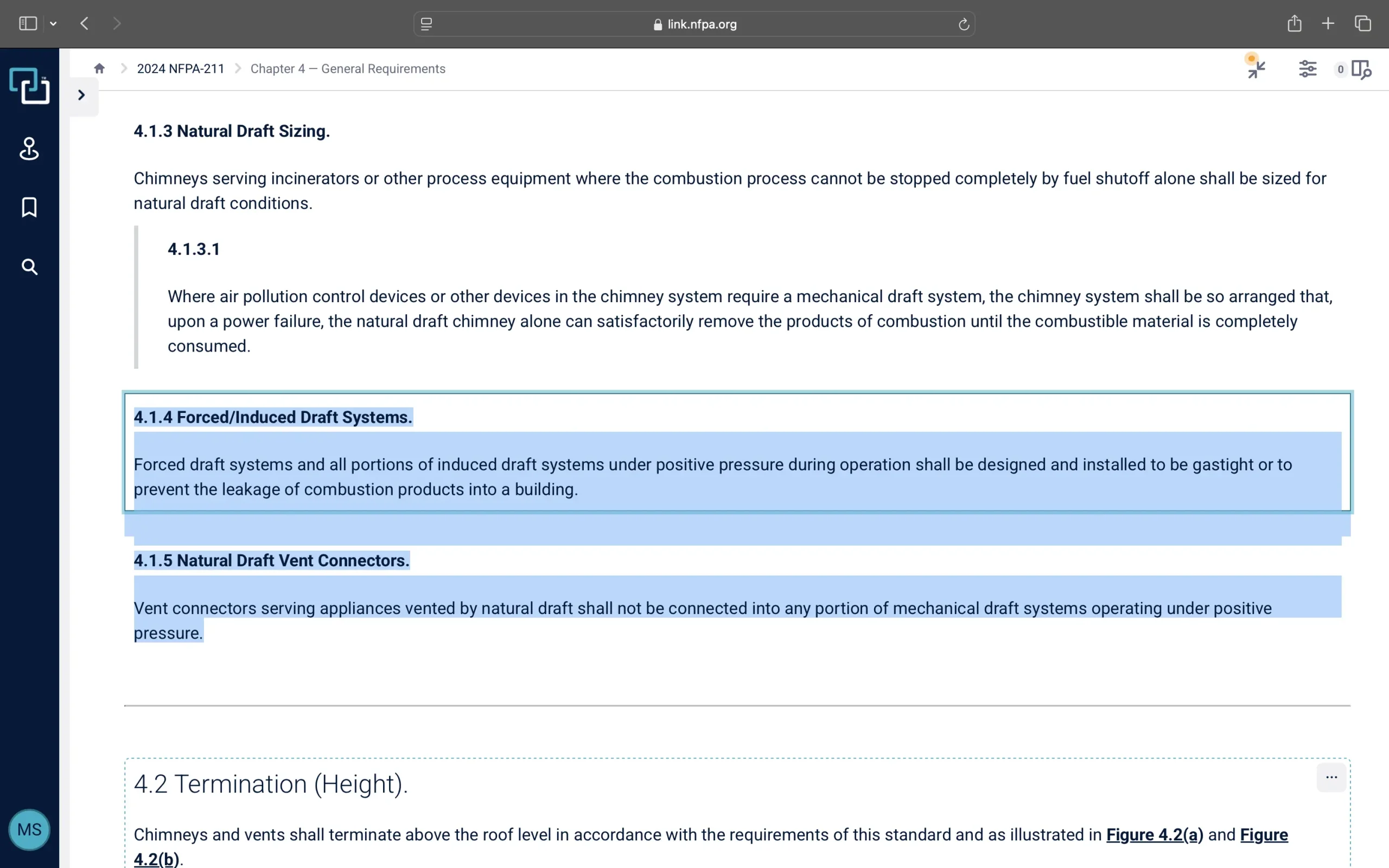
According to Virginia Fuel Gas Code, Virginia Mechanical Code, NFPA 54 National Fuel Gas Code, and NFPA 211. Venting appliances together in a single chimney or vent is subject to strict requirements. Here are key takeaways:
- Virginia Fuel Gas Code, 503.10.4. Two or more appliances connected to a single vent or chimney: Where two or more vent connectors enter a common vent, chimney flue or single-wall metal pipe, the smaller connector shall enter at the highest level consistent with the available headroom or clearance to combustible material. Vent connectors serving Category I appliances shall not be connected to any portion of a mechanical draft system operating under positive static pressure, such as those serving Category III or IV appliances.
- Virginia Mechanical Code, 804.3.1. Forced draft systems: Forced draft systems and all portions of induced draft systems under positive pressure during operation shall be designed and installed so as to be gas tight to prevent leakage of combustion products into a building.
- NFPA 54 National Fuel Gas Code, 12.4.3.3: Forced draft systems and all portions of induced draft systems under positive pressure during operation shall be designed and installed so as to prevent leakage of flue or vent gases into a building.
- NFPA 54 National Fuel Gas Code, 12.4.3.4: Vent connectors serving appliances vented by natural draft shall not be connected into any portion of mechanical draft systems operating under positive pressure.
- NFPA 211 Chimneys and Vents, 4.1.4 Forced/Induced Draft Systems: Forced draft systems and all portions of induced draft systems under positive pressure during operation shall be designed and installed to be gastight or to prevent the leakage of combustion products into a building.
- NFPA 211 Chimneys and Vents, 4.1.5 Natural Draft Vent Connectors: Vent connectors serving appliances vented by natural draft shall not be connected into any portion of mechanical draft systems operating under positive pressure.
Appointment Communications:
- Booking confirmation, at time of scheduling, via text or email
- Email identifying your assigned technician and what to expect
- Reminder notice, the day before your appointment, via text
- Final reminder, the morning of your appointment, via text
- 20-30 minute Heads up when technician is in route
They can share a vent ONLY if:
✅ Both appliances use natural draft and vent into a properly sized chimney or venting system.
✅ The furnace and water heater vent connectors follow clearance and placement regulations (VA Fuel Gas Code 503.10.4).
✅ The vent height and diameter can accommodate the combined flue gases without causing backdraft issues.
Final Verdict: When It’s Safe to Share a Vent
✅ A natural draft water heater and a natural draft furnace can share a vent ONLY if:
- Both use natural draft and vent into a properly sized vertical chimney or B-vent.
- The vent connectors follow code requirements, with the water heater connecting above the furnace.
- The vent system is correctly sized to handle the combined exhaust flow without creating backdrafting issues.
🚨 If any of these conditions are not met, a separate vent system is required.
For code compliance and safety, consult a professional before modifying or installing a shared venting system.
Appointment Communications:
- Booking confirmation, at time of scheduling, via text or email
- Email identifying your assigned technician and what to expect
- Reminder notice, the day before your appointment, via text
- Final reminder, the morning of your appointment, via text
- 20-30 minute Heads up when technician is in route
Understanding when a water heater and furnace cannot share a vent is crucial for safety, efficiency, and code compliance. The following situations require separate venting systems to prevent hazardous conditions like carbon monoxide buildup, backdrafting, and vent system failure.
❌ If either appliance uses forced draft or induced draft, they cannot share a vent with a natural draft water heater.
❌ A Category I natural draft appliance cannot connect to a vent system serving Category III or IV appliances(NFPA 54, 12.11.4.3).
❌ If the venting system is too small, the added exhaust volume could lead to dangerous carbon monoxide buildup.
Final Verdict: When Separate Vents Are Required
🚫 DO NOT share a vent if:
❌ One appliance is forced draft or induced draft, while the other is natural draft.
❌ One appliance is Category I and the other is Category III or IV.
❌ The vent system is undersized, leading to potential carbon monoxide leaks.
✅ When in doubt, consult a professional to ensure proper venting per Virginia’s Fuel Gas Code, Mechanical Code, and NFPA 54 & 211.
Appointment Communications:
- Booking confirmation, at time of scheduling, via text or email
- Email identifying your assigned technician and what to expect
- Reminder notice, the day before your appointment, via text
- Final reminder, the morning of your appointment, via text
- 20-30 minute Heads up when technician is in route
🔹 Consult a Professional: Have a licensed contractor inspect your system to determine if shared venting is possible.
🔹 Use a Proper Chimney Liner: If venting into a masonry chimney, ensure it’s lined and rated for the appliances’ venting needs (NFPA 211, 7.1.12).
🔹 Follow Clearance Requirements: Proper spacing between connectors ensures efficient exhaust flow and prevents combustion gas leaks.
Conclusion: Should You Share a Vent?
While a natural draft water heater and furnace can sometimes share a vent, it is critical to ensure compliance with Virginia’s Mechanical Code, Fuel Gas Code, and NFPA 211. If one appliance uses induced or forced draft, a dedicated vent system is required.
For the safest and most efficient installation, consult a certified professional to evaluate your home’s venting needs. Ensuring proper venting not only protects your home but also safeguards against carbon monoxide poisoning and potential code violations.
Appointment Communications:
- Booking confirmation, at time of scheduling, via text or email
- Email identifying your assigned technician and what to expect
- Reminder notice, the day before your appointment, via text
- Final reminder, the morning of your appointment, via text
- 20-30 minute Heads up when technician is in route